

What Are the Best Spanish Dad Jokes?
The best Spanish dad jokes are cheesy, clever, and packed with wordplay that makes bilingual families groan and laugh. They often rely on double meanings (polysemic words) that don’t quite translate, making them extra special for Spanish speakers and learners alike.
Why Spanish Dad Jokes Are the Perfect Mix of Cringe and Charm
Spanish dad jokes have a special flavor that makes them unique. They’re built to sound a little silly, land in one beat, and make someone roll their eyes while they laugh anyway. You don’t need native-level Spanish to enjoy them. A lot of the fun comes from simple words with two meanings, or from sounds that bump into each other in a funny way.
These jokes work best when you say them with a straight face. Don’t rush the punchline. Let it hang for a beat. The groans will follow naturally.
What Makes a Great Spanish Dad Joke?
Spanish dad jokes rely on a few special ingredients that make them work perfectly.
- 🎯 Polysemic words – Words like “nada,” “siento,” and “banco” have multiple meanings and are comedy gold.
- 😂 Sound play – Jokes that twist spoken rhythm into a fake phrase, like “té maré”.
- 🧀 Pure cheesiness – The sillier, the better. That’s the whole point.
- 🧠 Short and punchy – Get in, make them groan, move on.
- 🎵 Rhymes without reason – Some classic jokes work simply because they rhyme.
- 📝 Easy to repeat – You hear one once, steal it on the spot, then send it to three people before lunch.
The Classic “Nada” Fish Joke Every Spanish Dad Knows
This is probably the first joke many Spanish-speaking kids remember their dad telling. It’s simple, clean, and perfectly illustrates Spanish wordplay.
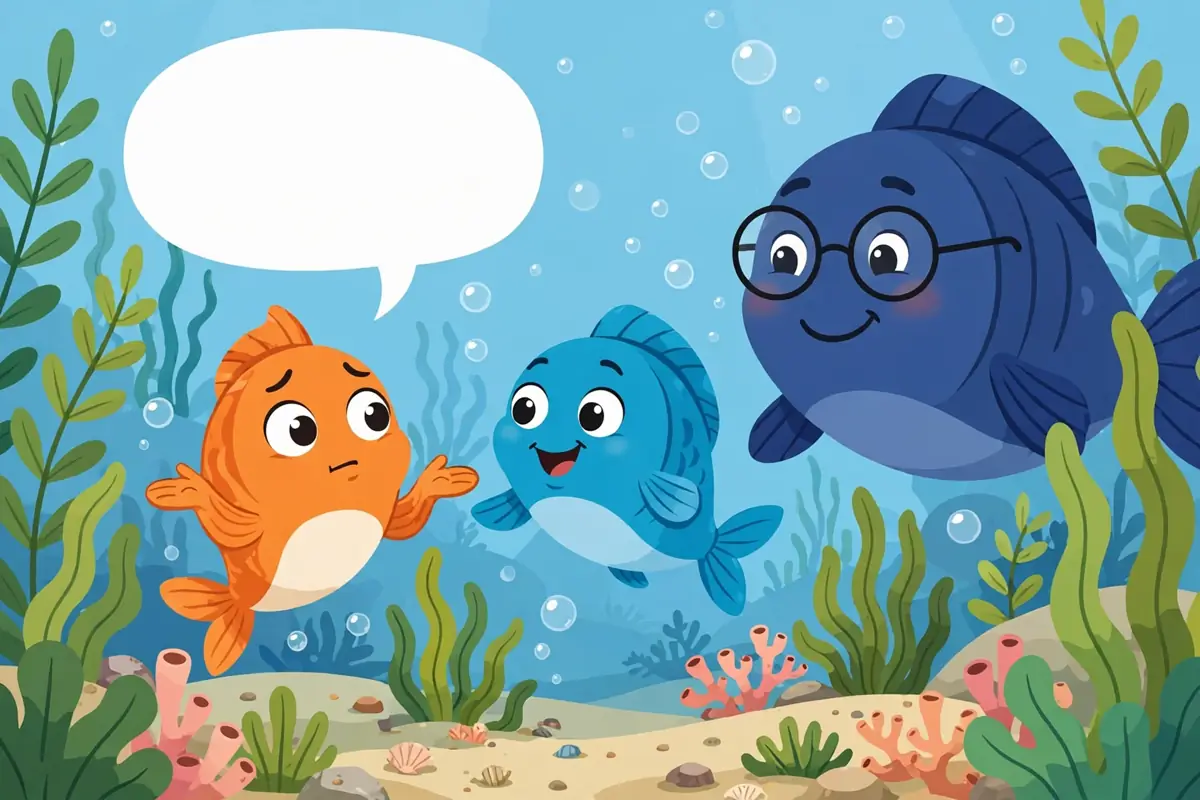
- 🐟 Un pez le pregunta a su amigo, ¿Qué hace tu padre? El otro dice: Nada.
- 🐟 Translation: One fish asks his friend, “What does your dad do?” The other fish says, “Nada.”
- 🐟 The joke works because “nada” means both “nothing” and “he swims”.
- 🐟 This is pure dad humor in its most beautiful form.
- 🐟 Kids love it because they feel clever when they get it.
- 🐟 It’s perfect for teaching Spanish double meanings.
- 🐟 Say it with a straight face for maximum effect.
¡Me Siento Mal! The Classic “Feel/Sit” Joke
This joke uses one of the most common double-meaning words in Spanish: “siento”.
- 😫 Niño: Papá, me siento mal. Papá: ¡Pues siéntate bien!
- 😫 Translation: Kid: “Dad, I feel bad.” Dad: “Sit well, then!”
- 😫 “Me siento mal” means “I feel bad,” but “siento” is also a conjugation of “sentar” (to sit).
- 😫 So Dad responds by telling his kid to sit properly instead of addressing the stomach ache.
- 😫 It’s a classic misinterpretation that makes kids roll their eyes.
- 😫 Say it with total seriousness for maximum impact.
- 😫 The kid will not appreciate it. That’s the point.
¡Me Duele Aquí! The “Hurt/Move” Joke
Another classic complaint-response joke that kids absolutely hate and dads absolutely love.
- 🤕 Yo: Papá, me duele aquí. Papá: ¡Pues muévete para allá!
- 🤕 Translation: “Dad, it hurts here.” “Then move over there!”
- 🤕 “Aquí” means “here,” but Dad interprets it as a place to stand rather than a spot on the body.
- 🤕 It’s a brilliant misunderstanding that gets kids every time.
- 🤕 This is dad humor at its finest—technically correct but entirely unhelpful.
- 🤕 It’s the kind of joke that gets passed down through generations.
¡¿Te Cuento?! The “Tell/Count” Joke
This joke plays on the double meaning of “contar,” which means both “to tell” and “to count”.
- 🔢 Hijo: Papá, cuéntame qué hiciste ayer. Papá: ¿Te cuento? Uno, dos, tres…
- 🔢 Translation: “Dad, tell me what you did yesterday.” “I’ll tell you! One, two, three…”
- 🔢 The kid wants a story; the dad gives numbers instead.
- 🔢 It’s completely unhelpful and absolutely perfect.
- 🔢 This joke works because “contar” is such a common verb.
- 🔢 You can keep counting indefinitely to extend the joke.
- 🔢 This is a great one for teaching Spanish double meanings.
Polysemic Word Jokes
Spanish is full of words with multiple meanings, making it a goldmine for dad jokes.
- 🏦 “Banco” means both “bank” and “bench” or “sandbank”.
- 🏦 These jokes rely on the listener choosing the wrong meaning first.
- 🏦 That’s what makes them funny (or groan-worthy).
- 🏦 Spanish learners will get a lot of value from these.
- 🏦 They’re perfect for teaching vocabulary.
- 🏦 “Banco” is one of the most common words for this type of joke.
- 🏦 “Nada” is another one.
- 🏦 You can build a whole repertoire around just these two words.
- 🏦 It’s a language made for puns.
Rhyme-Based Jokes That Make No Sense (And That’s the Point)
These jokes have a rhyme, not reason. They’re funny simply because they rhyme and they serve the purpose of buying some time.
- 🥶 Hijo: Tengo frío. Papá: Tapate con el poncho de tu tío.
- 🥶 Translation: “I’m cold.” “Cover yourself with your uncle’s poncho.”
- 🥶 It rhymes and it’s completely useless advice.
- 🥶 That’s the whole point.
- 🥶 It’s a classic “Rhyming Dad” move.
- 🥶 Every Spanish-speaking kid has heard these growing up.
- 🥶 Later in life, they’ll tell these same rhymes to their own kids.
- 🥶 These rhymes are part of Spanish-speaking culture.
Animal Jokes in Spanish
These animal-themed jokes are perfect for kids and animal lovers.

- 🐝 ¿Qué hace una abeja en el gimnasio? ¡Zum-ba!
- 🐝 Translation: “What does a bee do at the gym? Zum-ba!”
- 🐝 “Zum” is the sound a bee makes, and “Zumba” is a workout class.
- 🐄 ¿Qué hace una vaca en un terremoto? ¡Leche agitada!
- 🐄 Translation: “What does a cow do in an earthquake? Shaken milk!”
- 🐄 Because milk comes from cows, and “leche agitada” sounds like “milk shake.”
- 🐶 ¿Por qué los perros no usan celular? Porque prefieren ladrar.
- 🐶 Translation: “Why don’t dogs use cell phones? Because they prefer to bark.”
- 🐶 It’s simple, silly, and gets a giggle from kids.
- 🐷 ¿Por qué los cerdos no usan sombrero? Porque ya tienen jamón.
- 🐷 Translation: “Why don’t pigs wear hats? Because they already have ham.”
- 🐷 It’s a terrible pun and that’s exactly why it’s great.
- 🐱 ¿Qué dice el gato después de una buena comida? ¡Miau excelente!
- 🐱 Translation: “What does the cat say after a good meal? Meow-velous!”
- 🐱 It’s a purr-fect pun for cat lovers.
- 🐸 ¿Qué hace una rana en un restaurante? ¡Pide ancas!
- 🐸 Translation: “What does a frog order at a restaurant? Frog legs!”
- 🐸 That’s dark and hilarious at the same time.
- 🐮 ¿Qué hace una vaca con los ojos cerrados? Leche concentrada.
- 🐮 Translation: “What does a cow do with its eyes closed? Concentrated milk.”
- 🐮 Because milk is concentrated, and “concentrada” sounds like focus.
- 🐘 ¿Por qué los elefantes no usan computadora? Porque le tienen miedo al mouse.
- 🐘 Translation: “Why don’t elephants use computers? Because they’re afraid of the mouse.”
- 🐘 This one works in English too, which makes it extra special.
Food Jokes That Are Deliciously Funny
Food is a universal topic, and these jokes are perfect for any meal.

- 🍝 ¿Qué hace un espagueti? ¡Pasta la vista!
- 🍝 Translation: What does a spaghetti say? “Pasta la vista!”
- 🍝 It’s a classic that works in both languages.
- 🥚 ¿Qué hace un huevo en el gimnasio? Se pone duro.
- 🥚 Translation: What does an egg do at the gym? It gets hard.
- 🥚 Because eggs get hard when boiled, and “ponerse duro” means to get tough.
- 🧈 ¿Por qué el pan se divorció de la mantequilla? Porque se sentía aplastado.
- 🧈 Translation: Why did the bread divorce the butter? Because it felt squashed.
- 🧈 Because bread gets squashed, and “aplastado” means both squashed and emotionally crushed.
- 🧅 ¿Por qué lloró la cebolla? Porque vio el final de la receta.
- 🧅 Translation: Why did the onion cry? Because it saw the end of the recipe.
- 🧅 Because onions make you cry, and the “end” of the recipe is sad.
- 🍅 ¿Por qué el tomate se puso rojo? ¡Porque vio la ensalada!
- 🍅 Translation: Why did the tomato turn red? Because it saw the salad!
- 🍅 This works in English too, but it’s even better in Spanish.
- 🧀 ¿Qué le dice la sal al azúcar? ¡No seas tan dulce!
- 🧀 Translation: What does salt say to sugar? “Don’t be so sweet!”
- 🧀 It’s a cute pun that works great at the dinner table.
- 🍞 ¿Qué hace un pan con confianza? ¡Se corta solo!
- 🍞 Translation: What does bread do when confident? It cuts itself!
- 🍞 Because bread gets sliced, and “cortarse” means both to cut oneself and to be shy.
Classroom and School Jokes for Kids
These jokes are perfect for homework time or classroom brain breaks.
- 📚 ¿Por qué el libro de matemáticas estaba triste? Porque tenía demasiados problemas.
- 📚 Translation: Why was the math book sad? Because it had too many problems.
- 📚 “Problemas” means both school problems and emotional problems.
- 📚 It’s a classic that works in any language.
- 📐 ¿Qué hace una regla en la oficina? Mide el ambiente.
- 📐 Translation: What does a ruler do at the office? It measures the vibe.
- 📐 Because rulers measure things, and “el ambiente” means both the mood and the room.
- 📝 ¿Cómo se llama un alumno en huelga? Estudia-no.
- 📝 Translation: What do you call a student on strike? Study-no.
- 📝 It’s a pun on “estudiante” (student) and “estudia no” (don’t study).
- ✏️ ¿Qué hace un borrador celoso? Borra a los demás.
- ✏️ Translation: What does a jealous eraser do? It erases the others.
- ✏️ Because erasers erase, and jealousy leads to “erasing” rivals.
- 🎒 ¿Qué le dijo la tiza al pizarrón? ¡Te amo con toda mi línea!
- 🎒 Translation: What did the chalk say to the blackboard? “I love you with all my line!”
- 🎒 Because chalk writes lines, and “línea” sounds like “línea de vida” (life line).
Wordplay and Sound Jokes
Spanish is full of sounds that make perfect puns.
- ☕ ¿Cuál es el café más peligroso? El ex-preso.
- ☕ Translation: What is the most dangerous coffee? The ex-prisoner.
- ☕ “Espresso” sounds like “ex-preso” (former prisoner).
- ☕ It’s a sound swap that works perfectly.
- 🌊 ¿Qué hace una taza en el mar? Té maré.
- 🌊 Translation: What does a cup do in the sea? It “tea-mare-ee.”
- 🌊 It bends the sound of “te mareé” (I made you seasick) into something silly.
- 🧪 ¿Cómo se despiden los químicos? Ácido un placer.
- 🧪 Translation: How do chemists say goodbye? “Acid a pleasure.”
- 🧪 It twists “ha sido un placer” (it’s been a pleasure) into a nerdy pun.
- 🌿 ¿Qué le dice un jardinero a otro? Nos vemos cuando podamos.
- 🌿 Translation: What does one gardener say to another? “See you when we can.”
- 🌿 “Podamos” sounds normal but actually means “we prune”.
- 🐄 ¿Qué hace una vaca cuando sale el sol? Sombra.
- 🐄 Translation: What does a cow do when the sun comes out? Shade.
- 🐄 A cow making “shade” is absurd, and that dry absurdity is pure dad-joke fuel.
One-Liner Puns for Quick Laughs
These short jokes are perfect for text messages or quick laughs.
- 📱 ¿Cómo se llama un boomerang que no vuelve? ¡Un palo!
- 📱 Translation: What do you call a boomerang that doesn’t come back? A stick!
- 📱 It’s dumb and perfect.
- 🐦 ¿Por qué los pájaros no usan Facebook? Porque ya tienen Twitter.
- 🐦 Translation: Why don’t birds use Facebook? Because they already have Twitter.
- 🐦 Because birds tweet. It’s a classic.
- 🪨 Nunca confíes en un átomo, ¡lo inventa todo!
- 🪨 Translation: Never trust an atom—they make up everything!
- 🪨 This works in both languages.
- 🚴 Mi bicicleta no puede mantenerse en pie… está two-tired.
- 🚴 Translation: My bike can’t stay up—it’s two-tired.
- 🚴 It’s an English pun that works in Spanish too.
Q&A Jokes for Interactive Fun
These Q&A jokes are perfect for getting everyone involved.
- ❓ Q: ¿Cómo se llama un perro sin patas? A: Da igual cómo lo llames, no va a venir.
How to Tell Spanish Dad Jokes Like a Pro
Even the best joke needs good delivery. Here’s how to make your Spanish dad jokes land perfectly.
- 😌 Keep a completely straight face – The key is to deliver the joke like you’re giving serious advice.
- ⏱️ Perfect timing – Pause just before the punchline. Let the anticipation build.
- 🎭 Embrace the cringe – Lean into the terribleness. That’s the whole point.
- 📝 Don’t explain the joke – Explaining a terrible joke makes it worse (and funnier).
- 🔄 Repeat the same jokes – The more you tell them, the “better” they get.
- 😂 Let them groan – A groan is the highest compliment for a dad joke.
- 👨👩👧👦 Know your audience – Some people have a higher tolerance for terrible jokes than others.
Why Spanish Dad Jokes Are So Important
Spanish dad jokes are part of a rich cultural tradition. They bring families together through shared groans and laughter, and they help preserve the Spanish language for younger generations.
Behind the kids’ grunts and eye rolls, a playful sense of joy faintly shines through. Reminiscing over these jokes makes people think fondly of their own parents and their corny humor.
FAQ About Spanish Dad Jokes
What are the best Spanish dad jokes?
Some of the best Spanish dad jokes include “¿Qué hace una abeja en el gimnasio? ¡Zum-ba!” and “¿Por qué el libro de matemáticas estaba triste? Porque tenía demasiados problemas”. These are clean, simple, and always get a groan.
Why are Spanish dad jokes unique?
Spanish dad jokes often rely on polysemic words (words with multiple meanings) like “nada,” “siento,” and “banco.” They also use sound play and rhyming that doesn’t translate to English.
What does “nada” mean in Spanish jokes?
“Nada” means both “nothing” and “he/she swims.” This double meaning is the basis for many classic fish jokes.
What are good Spanish dad jokes for kids?
Kids love jokes like “¿Qué hace un pez? Nada!” and “¿Cómo se llama un perro sin patas? Da igual cómo lo llames, no va a venir”. These are simple and easy to understand.
Are Spanish dad jokes appropriate for the whole family?
Yes, most Spanish dad jokes are clean and family-friendly. They’re perfect for dinner tables, family gatherings, and teaching Spanish to kids.
What are rhyming Spanish dad jokes?
Rhyming jokes include “Tengo frío – Tapate con el poncho de tu tío” and “Tengo hambre – Chupate el dedo grande”. They rhyme without making sense, which is the whole point.
What are some Spanish dad jokes about animals?
Animal jokes include “¿Qué hace una vaca en un terremoto? Leche agitada!” and “¿Por qué los perros no usan celular? Porque prefieren ladrar”.
What are Spanish dad jokes about food?
Food jokes include “¿Cómo se despide un espagueti? Pasta la vista!” and “¿Por qué lloró la cebolla? Porque vio el final de la receta”.
Conclusion
Spanish dad jokes are a beautiful tradition that brings families together through shared groans and laughter. They’re cheesy, clever, and packed with wordplay that makes them special to the Spanish language. Behind the kids’ eye rolls and annoyed grunts, there’s a playful sense of joy that faintly shines through.
These jokes are perfect for dinner tables, classroom breaks, text messages, or any time you want to annoy your loved ones while making them laugh. They’re easy to repeat, even easier to share, and they never get old—just like dads themselves.
Save this list, share it with your favorite Spanish speakers, and always remember: ¡Los chistes malos son los mejores! For even more groans at home, try our classic dad jokes, our roundup of the best dad jokes, and our math dad jokes for number-loving papás.

Mason Collins writes original jokes with a focus on creativity, quality, and delivering enjoyable reading experiences for a global audience.